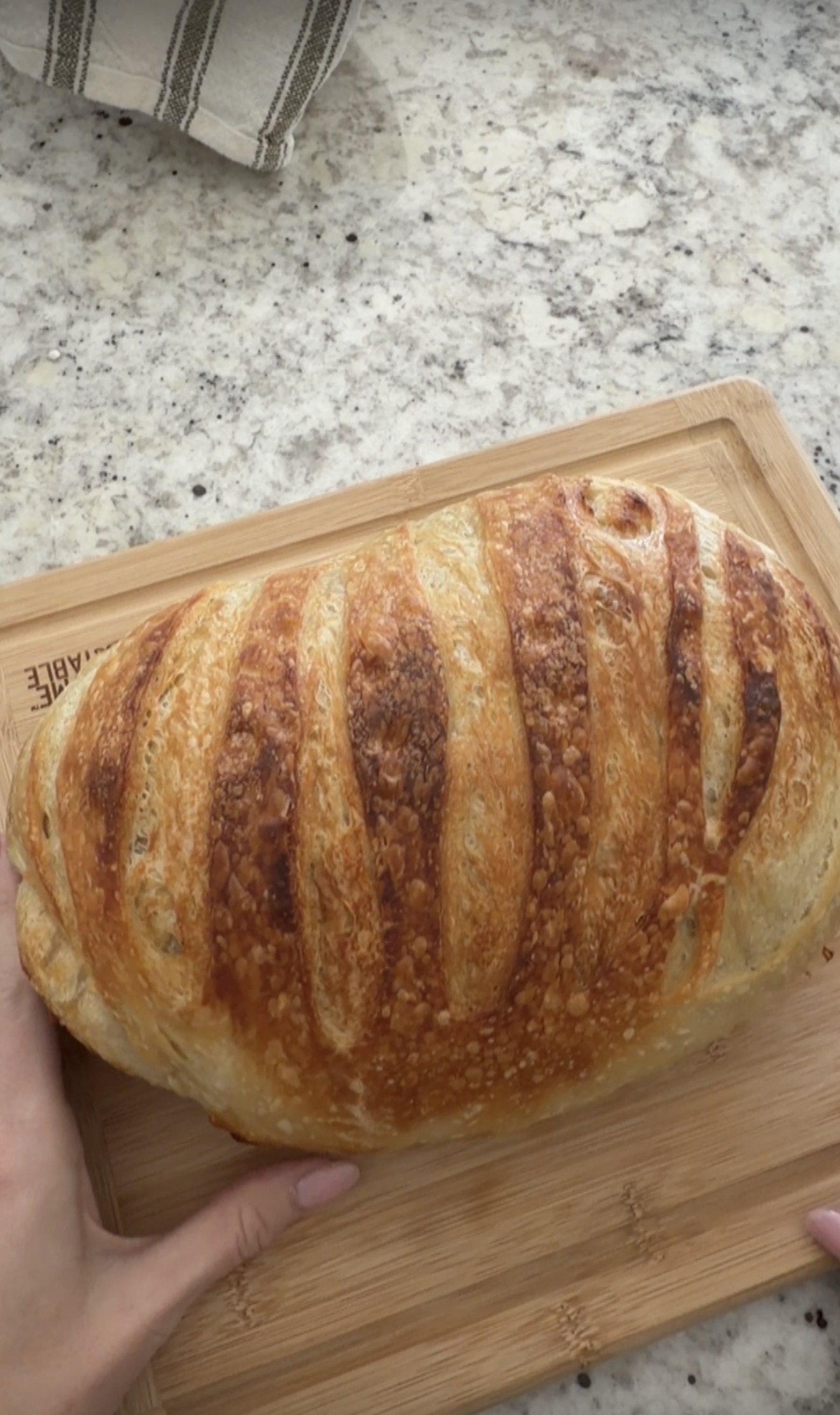
How to Make Sourdough Butter Croissant Bread from Scratch
(The Easiest Flaky Loaf You'll Ever Bake)
There's a moment, right around the five-hour mark of a sourdough bake day, when the oven does its thing and your whole house starts smelling like a French bakery. That's the moment I live for. And if you've been anywhere near the from-scratch baking corner of the internet lately, you've probably seen sourdough butter croissant bread popping up everywhere — for good reason.
This loaf is what happens when a classic sourdough meets the buttery, flaky layers of a croissant, and it's so much simpler than it looks. No complicated lamination. No butter blocks. No yeast. Just your sourdough starter, flour, water, salt, and a generous amount of cold butter folded into the dough. The result is a golden, pull-apart bread with layers that crackle when you slice into it.
I tried my first sourdough butter croissant bread a few weeks ago after months of regular sourdough baking, and it immediately became a household favourite. My kids now ask for "bakery day" on repeat. If you've been wanting to try something new with your sourdough starter — or if you're deep in the butter mom era like me and want your kitchen to smell incredible — this one's for you.
What Makes Sourdough Butter Croissant Bread Different
Traditional sourdough bread is beautiful on its own, but sourdough butter croissant bread takes it somewhere new. The technique is called a butter inclusion — instead of mixing butter into the dough the way you would with brioche, you grate frozen butter and fold it in during shaping. This creates thin layers of fat between the dough, almost like a very simplified version of croissant lamination.
The result is bread that's soft and tender inside with distinct flaky layers, topped with a golden crust that shatters when you tear into it. It's the kind of bread that makes people ask what bakery you went to.
The beauty of this method is that it doesn't require any special skills beyond basic sourdough baking. If you can make a simple loaf, you can make this.
What You'll Need
The ingredient list is almost laughably short, which is part of the magic of from-scratch baking: your active sourdough starter (fed and bubbly), bread flour, water, salt, and a good-quality unsalted butter. That's it. I always use European-style butter with a higher fat content because it creates better layers, but any unsalted butter works.
For tools, you'll want a box grater (for the frozen butter), a Danish dough whisk or sturdy spatula, a bench scraper, parchment paper, and a Dutch oven or loaf pan. I use my Danish dough whisk for every sourdough recipe now — it handles heavy, sticky doughs so much better than a regular whisk or wooden spoon.
Step-by-Step: Making Your Sourdough Butter Croissant Bread
Start with your starter.Make sure it's active, bubbly, and has at least doubled in size after its last feeding. This is the engine of the whole loaf — if your starter isn't ready, your bread won't rise properly.
Mix your dough.Combine your flour, water, salt, and starter until you have a shaggy dough. Let it rest (autolyse) for 30 minutes. Then do 3–4 sets of stretch and folds over the next two hours, resting 30 minutes between each set. You'll feel the dough go from sticky and loose to smooth and elastic.
Bulk fermentation.Let your dough rise at room temperature until it's grown by about 50%. This can take anywhere from 4–8 hours depending on your kitchen temperature. Don't rush it — sourdough works on its own schedule.
The butter inclusion (this is the fun part).While your dough finishes its bulk rise, put your butter in the freezer for at least 30 minutes. When you're ready to shape, turn your dough out onto a lightly floured surface and stretch it into a rough rectangle. Grate the frozen butter directly over the dough using a box grater. Fold the dough in thirds like a letter, then fold it in thirds again the other direction. You want those butter shreds trapped between layers of dough.
Shape and cold proof.Shape your dough into a round boule or place it in a lined loaf pan. Cover it and put it in the fridge for 12–16 hours. The cold proof is essential for this bread — it firms up the butter layers so they create steam pockets in the oven, which is what gives you that flaky, croissant-like texture.
Bake.Preheat your oven to 450°F with your Dutch oven inside (if using one). Score the top of your loaf with a bread lame — I love the ear pattern it creates, and a sharp lame makes all the difference.LTK LinkBake covered for 20 minutes, then uncovered for another 20–25 minutes until the crust is deep golden brown. Let it cool for at least an hour before slicing. I know that's the hardest part, but the crumb needs time to set.
Tips from My Kitchen to Yours
Keep everything cold.This is the single most important tip for sourdough butter croissant bread. If your kitchen runs warm (mine does in the afternoons), do the butter inclusion step in the morning when the house is cool. If the butter melts into the dough instead of staying in distinct layers, you'll lose the flaky texture. I learned this the hard way on my first attempt — the butter melted, and the loaf came out dense and greasy. The second time, I worked fast with frozen butter in a cool kitchen, and the difference was night and day.
Use a box grater, not a knife.Grating creates thin, even shreds of butter that distribute perfectly through the layers. Cutting butter into cubes leaves you with uneven pockets.
Don't skip the cold proof. Room temperature proofing will give you a nice loaf, but the cold proof is what creates the magic. Those firm butter layers release steam in the hot oven and puff up into flaky, distinct layers.
Score with confidence.A deep, decisive score (about half an inch) lets the bread expand properly in the oven and creates that gorgeous ear. A bread lame with a curved blade works best for this.
Common Mistakes to Avoid
Working with warm butter is the number one reason this bread doesn't turn out. If your butter is soft when you fold it in, start over with a fresh block from the freezer.
Over-proofing is the other big one. If your dough has more than doubled during bulk fermentation, it's likely over-proofed. The loaf will still taste good, but it won't have the structure to hold those beautiful layers.
Using all-purpose flour instead of bread flour will give you a softer, less structured crumb. Bread flour's higher protein content is what gives this loaf its chewy, satisfying texture.
And finally — don't slice too early. I know the smell is intoxicating. But cutting into hot bread compresses the crumb and releases all that steam you worked so hard to create. One hour minimum. Put on a podcast. Walk away.
Why This Bread Fits the From-Scratch Life
There's a reason sourdough has become the unofficial bread of the from-scratch living movement. It's slow. It's intentional. It asks you to pay attention to time and temperature instead of rushing to a result. This sourdough butter croissant bread takes that philosophy and adds a little bit of magic — the kind where three simple ingredients and some patience turn into something that looks and tastes like it came from an artisan bakery.
For me, baking days have become one of my favourite rituals. The kids help measure flour, they watch the dough rise, and by the end of the day we're all tearing into warm bread together. It's the butter mom era in action — choosing abundance, slowing down, making something beautiful with your hands.
FAQ
Can I make sourdough butter croissant bread without a Dutch oven?
Yes. You can bake it in a standard loaf pan or on a baking sheet. If you skip the Dutch oven, place a pan of water on the rack below your bread for the first 20 minutes to create steam, which helps develop the crust.
How long does sourdough butter croissant bread stay fresh?
It's best within the first two days. Store it cut-side down on a cutting board at room temperature. After day two, slice and toast it — it makes incredible toast with butter and jam.
Can I use sourdough discard for this recipe?
This recipe works best with active, fed starter rather than discard. The active starter provides the rise and structure you need for those layers. Save your discard for pancakes or crackers instead.
What if my sourdough starter isn't very active yet?
If your starter is new (less than a few weeks old), it may not be strong enough to rise this bread fully. Give it more time, feed it consistently, and try a basic sourdough loaf first before attempting the butter croissant version.
Ready to try it? Tag me @alyssaknight.bc on Instagram when you bake yours — I want to see those flaky layers.
Sign up for my newsletter for more from-scratch recipes every week.
